
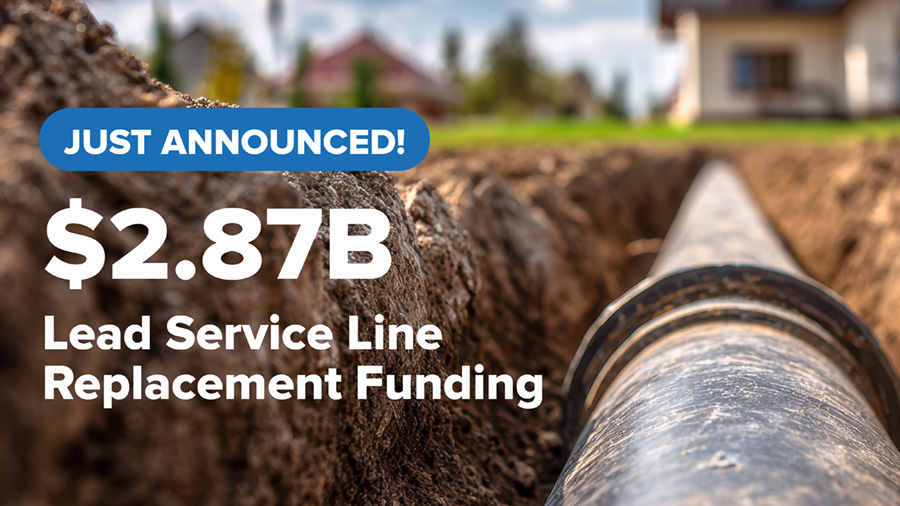
More funding is on the way to U.S. states and territories to reduce lead in drinking water. The U.S. Environmental Protection Agency (USEPA) recently announced $2.875 billion in funding to protect Americans from exposure to lead. The investment will be dispersed through the Drinking Water State Revolving Funds (DWSRF).
Communities can use the funds for identifying lead pipes, planning removal projects, and funding replacement of lead service lines. The DWSRF are financial assistance programs run by States to help water systems meet the health protection objectives of the Safe Drinking Water Act (SDWA).
USEPA is distributing funding based on State-reported information about the locations of approximately four million lead service lines across the country. The DWSRF funding allocation to certain States are provided in the table. A comprehensive list that includes the distribution and subsidy for every State and U.S. territory can be found here.
| State | DWSRF Distribution |
|---|---|
| Colorado | $27,456,000 |
| Idaho | $27,456,000 |
| Iowa | $46,116,000 |
| Minnesota | $57,770,000 |
| Montana | $27,456,000 |
| North Dakota | $27,456,000 |
| South Dakota | $27,456,000 |
| Utah | $27,456,000 |
| Wisconsin | $94,312,000 |
| Wyoming | $27,456,000 |
Under the Lead and Copper Rule Improvements (LCRI), water systems have less than a year and a half to complete their baseline service line inventories and create service line replacement plans for all lead and galvanized requiring replacement service lines identified within the system. The baseline inventory must be submitted by November 1, 2027.
For additional information about the LCRI, visit the Perspectives and Insights section of the AE2S website.