
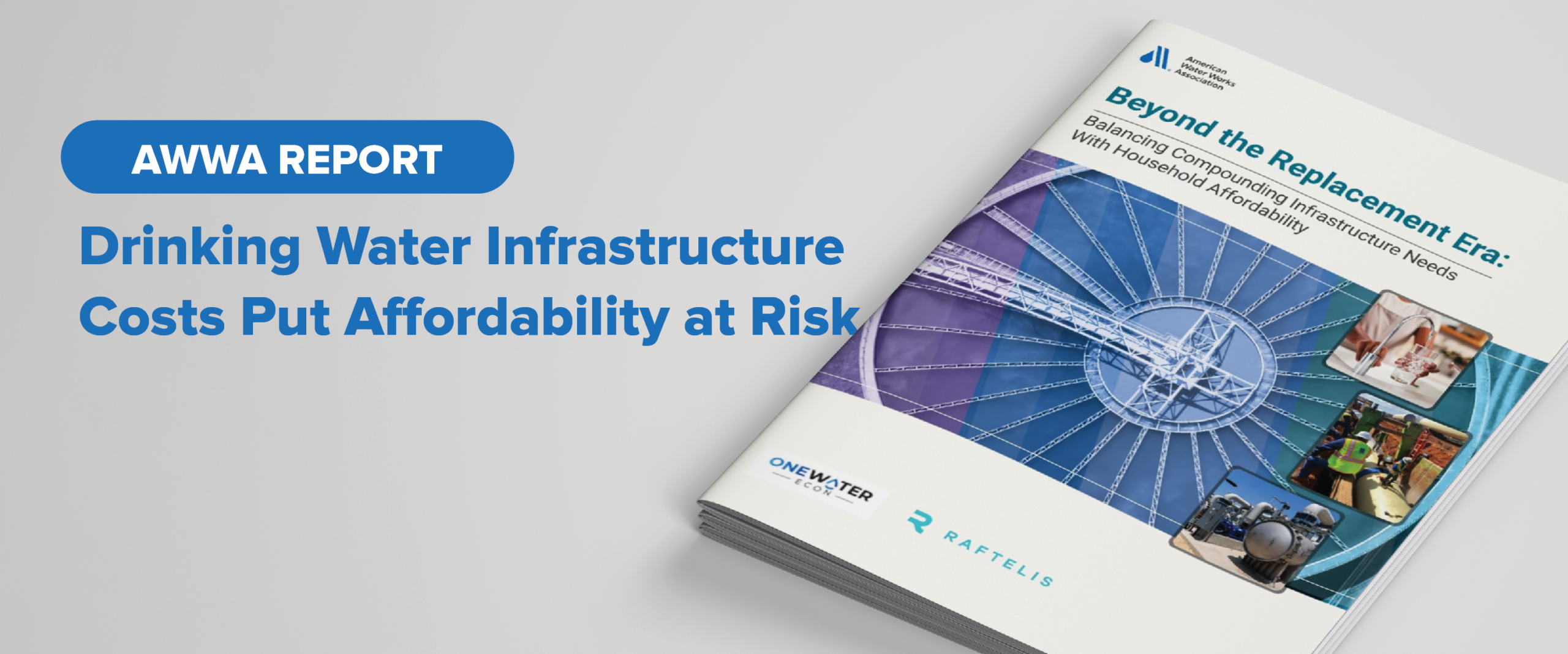
A report by the American Water Works Association (AWWA) found U.S. drinking water infrastructure and other critical needs will require infrastructure investments of $2.1 to $2.4 trillion over the next 25 years.
The AWWA says its report, Beyond the Replacement Era: Balancing Compounding Infrastructure Needs with Household Affordability, provides the most comprehensive assessment to date of the investments needed to sustain safe, reliable drinking water service through 2050.
The five key takeaways include:
- The Water Sector Has Entered a New Cost Era
The costs related to regulatory compliance, climate resilience, cybersecurity, and treating more complex water sources are further compounding drinking water utilities’ asset‑replacement challenges. - The Persistent and Growing Funding Gap
Current capital spending by drinking water utilities averages about $33.6 billion per year, while the annual investment needed to meet projected requirements is approximately $90.2 billion. This leaves an annual funding gap of roughly $56.6 billion, requiring a 168% increase in capital investment to close it. - Doubling Household Drinking Water Bills
The customers of systems that rely solely on revenue from water bills to close the funding gap could see their average annual household drinking water bills increase from $429 in 2025 to $969 by 2050. Under a baseline spending scenario, the AWWA projects water bills to increase to $685 annually due to rising operating and maintenance costs. - Affordability Tipping Point
An estimated $13.6 billion per year in assistance will be needed by 2050 to keep water bills below commonly understood affordability benchmarks. Impacts would disproportionately affect low‑income households and communities served by small systems. - Core Federal Infrastructure Loan Programs are Critical
The Infrastructure Investment & Jobs Act provided a historic and much-needed infusion of funding that expires after fiscal year 2026. State Revolving Loan Funds (SRF) and the Water Infrastructure Finance and Innovation Act (WIFIA) remain critical, helping water utilities access low-cost loans with extended repayment periods and customizable terms. Reductions in financing costs can moderate rate increases and help keep water affordable for customers.
The AWWA says unlike earlier assessments focused primarily on buried drinking water infrastructure, Beyond the Replacement Era incorporates a broader set of cost drivers, including treatment upgrades for emerging contaminants such as per- and polyfluoroalkyl substances (PFAS) and lead service line replacement.
Download the Beyond the Replacement Era: Balancing Compounding Infrastructure Needs with Household Affordability report from the AWWA website.