

Communities across our region are facing a familiar challenge: aging water, wastewater, and stormwater systems; evolving regulations; and rising construction costs. These challenges are compounded by funding streams that do not always keep pace. Together, this creates real pressure on communities as you plan and budget for essential capital projects.
While the landscape is challenging, the good news is that funding is still available. Communities that plan intentionally and prepare early are the ones best positioned to secure support.
Why Staying Ahead Matters
Federal and state programs continue to evolve, and these shifts affect how prepared communities must be to act. For example, the U.S. Department of Agriculture (USDA) Water and Waste Disposal Program saw a major change in its FY2026 budget request. Loan authority increased significantly, while grant funding decreased, meaning more low interest financing but fewer grants to offset costs.
The Drinking Water State Revolving Fund (DWSRF) and Clean Water State Revolving Fund (CWSRF) continue to support infrastructure needs, but earmarks, also known as congressionally directed spending, consumed more than half of FY2026 allocations thereby making the remaining funds more competitive.
In the western states, WaterSMART continues to offer opportunities backed by long term federal investments. The Bipartisan Infrastructure Law (BIL) committed $8.3 billion to Reclamation water infrastructure, and the Inflation Reduction Act added $4 billion for drought mitigation, with both funds being generally competitively awarded.
The bottom line is that funding still exists, but it increasingly favors communities with clear plans and solid financial preparation that can demonstrate a more compelling case than other communities.
Key Funding Opportunities for Water, Wastewater & Stormwater Projects
We have compiled a select list of programs that are still available with key points as to why having a plan will help you to stand out.
1. USDA Water and Waste Disposal Program
- Target projects: drinking water, wastewater, solid waste, and stormwater
- Available Funding: $1.2 billion in loan dollars and $144 million in grants
- Eligible applicants: local governments, nonprofits, and tribes serving a population less than 10,000
Why a plan matters: As grants become more competitive, organizing your top priority needs into a clear, structured plan will help distinguish your application.
2. National Rural Water Association Rural Water Loan Fund (RWLF)
- Target projects: drinking water planning and smaller infrastructure needs
- Available Funding: up to $200,000 (or 75% of project cost) financed over 10 years at variable interest rates
- Eligible applicants: small public water and wastewater utilities serving fewer than 10,000 people or utilities in a rural area
Why a plan matters: The program is available to help you develop a plan to stand out for larger opportunities amongst greater competition.
3. State Revolving Funds (SRF)
- Target projects: water system expansion projects and wastewater or stormwater system improvements
- Available Funding: varies by program and your state
- Eligible applicants: municipalities and dedicated utility systems
Why a plan matters: Not every state is able to fully fund these low-interest loans for communities so having a well-documented plan showing financial need will allow your projects to rank higher.
4. WaterSMART
- Target projects: drought resilience, conservation, and system modernization
- Available Funding: over $12 billion in recent appropriations
- Eligible applicants: water systems in western states including North Dakota, South Dakota, Montana, Wyoming, Colorado, Utah, and Nevada
- Special Note: requires a 50% cost-share
Why a plan matters: These grants are highly competitive across a large area.
Strategies to Keep Projects Moving Forward
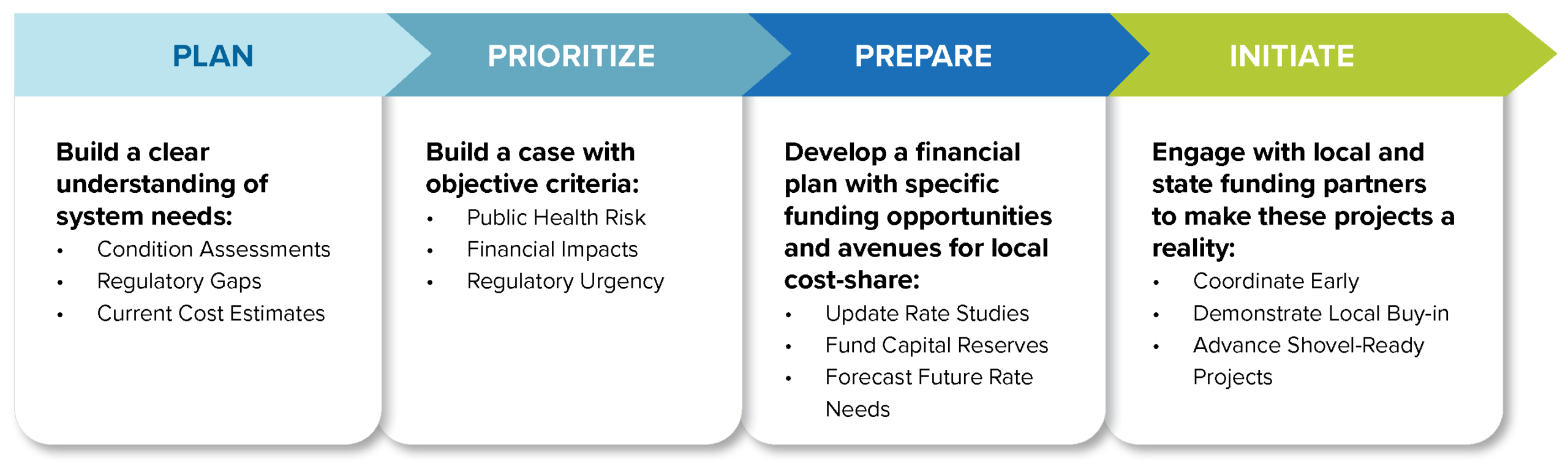
Even with uncertain outside funding, communities that take a systematic approach to project planning across their entire system can find success. Key strategies to this include:
When your community is balancing aging infrastructure with tight budgets, navigating shifting funding programs can feel daunting. With the right preparation, however, you can bring clarity to complex decisions and strengthen your ability to compete for available resources.
Contact Ryan Graf, AE2S Nexus Senior Consultant, if you have questions about budget planning for future projects.